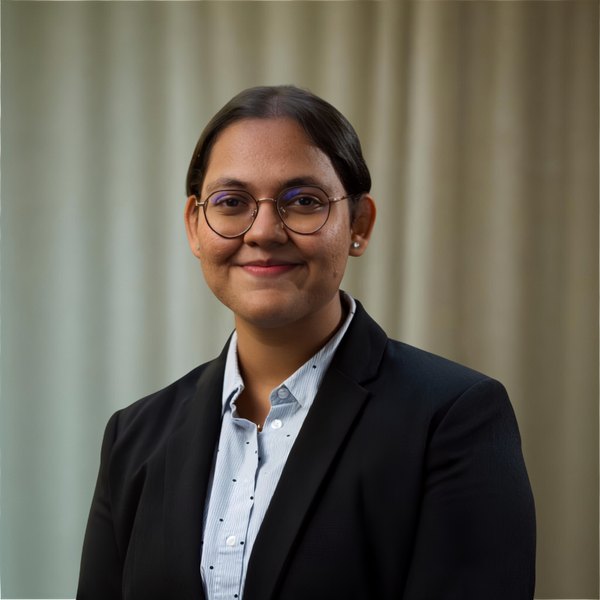
Product Manager · Platform and AI · Melbourne

Shambhavi
Gupta

I go by Shaam.

I take problems that arrive tangled and hand teams back something they can actually build from.

I work on AI and platform features for an AI-driven SaaS product. I came into product from analytics, and the thing that moved me across was noticing that the model was never the interesting part. What people did with the output was.

Below are three projects from my own work, most recent first. Each one is interactive, so you can try the thing rather than read about it.

Shambhavi Gupta
reads the messbriefs, threads, data
writes it downsomething to argue with
ships itwith the evidence
likes telling the storyin the data itself

Three projects below · all of them interactive  ↓

01 – Work

Highlighted work

Three projects from my own work, most recent first. Each one starts with the problem I was actually handed, then what I did about it.

PROJECT 01 OF 03 My work at Optevo · 2026

An AI that drafts your tasks but is never allowed to create them

My role: Product Manager, Platform and AI. Product, design, backend, AI, two frontend engineers and two QA, across three timezones.

Teams were retyping long briefs and threads into tasks by hand, and losing any trace of why a task existed. I argued against letting the model write straight into the work queue, and drew a line instead: the AI proposes, a person approves, and only then does the platform create anything.

AI governance design Release readiness Scope negotiation QA triage Azure DevOps Jira Figma

The problem

Teams were turning long briefs and discussion threads into work items by hand. Someone reads the document, decides what needs doing, and retypes it as tasks. It is slow, it comes out differently depending on who did it, and the link back to why a task exists disappears the moment it is created. Weeks later, nobody on the board can answer why something is on it.

My approach

The obvious build is to let the model write straight into the work queue, and I argued against it: that puts something nobody reviewed into the list people are actually working from. So I drew a hard line instead. The AI proposes, a person approves, and only then does the platform create anything. Try to break it below.

Press Push straight to the list and watch what happens. Then try the other one.

Source

brief.md

A long brief, or a thread nobody wants to read twice.

AI proposal · held

Draft the Q3 migration checklist

proposed, not a task
source: brief.md §3

AI stops here

People decide, then the platform creates

I argued for that shape before the build started. It shipped on the committed date, with ten user stories passing, four blockers and three polish items closed with retest proof, and an independent QA re-test of nineteen items. The go/no-go call itself sat with the product owner.
PROJECT 02 OF 03 My work at AGL Energy · 2024

Forecasting what a $1.1 billion rebate would do to the debt book

My role: Commercial Analyst, Credit and Affordability. Team of four, five weeks.

AGL needed to know whether a $1.1 billion government rebate would genuinely pay down its debt book, or be absorbed by customers already struggling. I argued for simulating the range rather than handing over a single number, because a provisioning decision needs to know how wrong the forecast could be.

Monte Carlo simulation Bootstrapping Segment transition modelling Python SQL Excel

The problem

A $1.1 billion government energy rebate was about to land on customer accounts. AGL needed to know whether that money would genuinely pay down its debt book, or whether customers already struggling would absorb it without their payment behaviour changing at all. The answer drives how much bad debt to provision for and where to point collections effort.

My approach

A single-point forecast gives the business one number to plan around, which for a provisioning decision is close to the least useful shape. What you need is how wrong that number could be. So I argued for Monte Carlo simulation over 25 customer segments, and bootstrapped the segments where the evidence was thinnest rather than assuming a figure.

Press run to draw a thousand simulated outcomes.

Forecast reduction · nothing drawn yet
0%1%2%3%4%

Live demo of the method. The ~2% central case is the real forecast; the spread here is illustrative and redraws on each run.

Central case

press run

Illustrative spread

press run

The thing worth seeing

rebate paid out

$1.1 billion

forecast movement

about 2%

The interesting part was the gap between what you would assume and what the numbers suggested. It is a forecast, not a realised outcome, and I have no visibility into whether it was picked up afterwards.

PROJECT 03 OF 03 My work with Team UAS NMIMS · Techfest, IIT Bombay · 2020

One assumption, and the whole thing changes shape

My role: shaped the solution, ran the timeline, designed the marketplace flow, wrote the report. The hardware build sat with my teammates.

Wheat farmers across four Indian states were making decisions from experience rather than measurement, and a large share of them did not own a phone. Taking the smartphone away is what shaped the design: the screen had to come back onto the device, legible at a glance without reading text.

Product discovery UI flow design Embedded sensing Python Flask Arduino / Node MCU Heroku

The problem

Wheat farmers across four Indian states were making sowing and irrigation decisions from experience rather than measurement, with no reliable read on soil nutrients, moisture or water quality, and no direct route to a buyer. Most of them were also illiterate or semi-literate, and a large share did not own a phone.

My approach

Almost every product in this space quietly assumes a smartphone in someone's pocket. Taking that away is what shaped everything: the screen had to come back onto the device, and the readings had to be legible at a glance without reading text. Flip the assumption below and watch what has to change.

◎ Press either one

The constraint that changed the hardware

Once the phone goes, the screen has to come back to the device, and the readings have to be legible at a glance to someone who may not read at all. That is why the handheld carries its own display, laid out as one panel rather than a menu.

We narrowed to wheat across four contiguous states and I wrote down why. The marketplace piece came out of the 2020 farm ordinances, which opened up trade outside the regulated mandis and left many farmers worried the price floor they had relied on would erode in practice. I designed that flow.

Honest about what it was: a working prototype producing live sensor readings, not a calibrated or field-validated system. Fifth nationally. It did not go further.

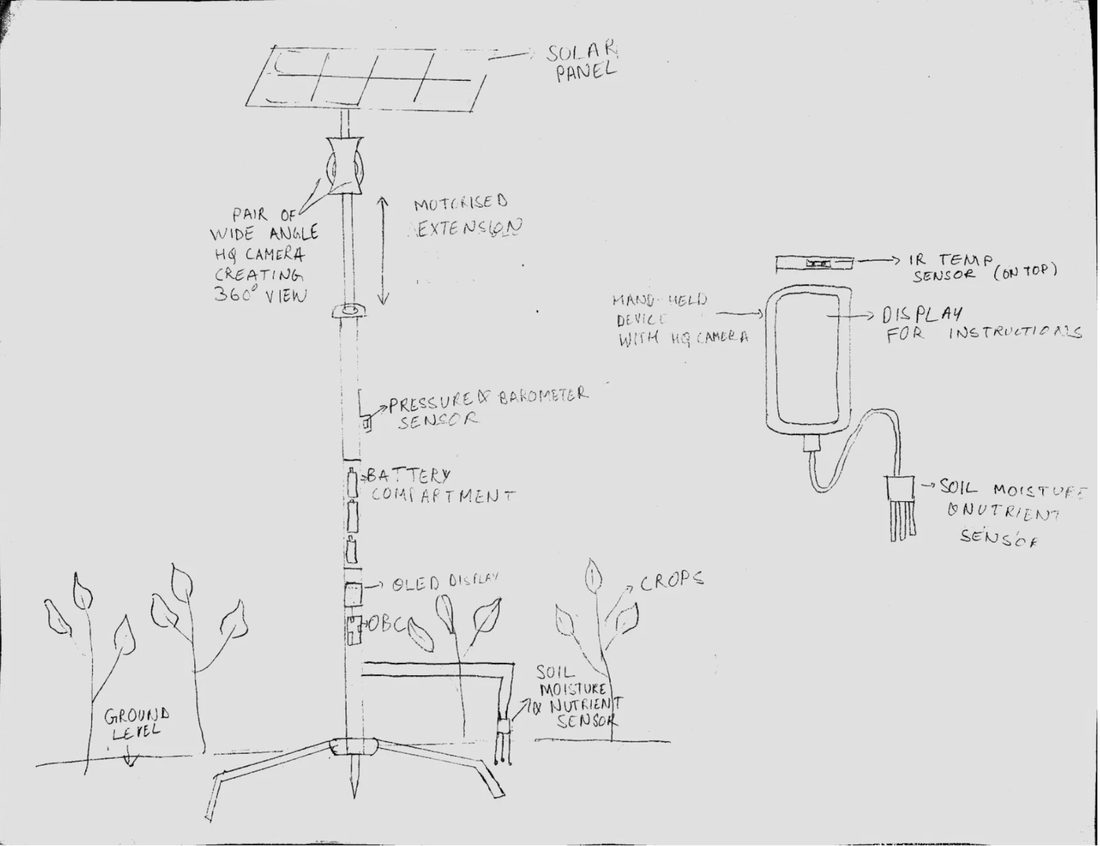
Hand-drawn design sketch of the solar sensor mast and the handheld unit, with components annotated

The design sketch, 2020. Drawn before any of it existed.

Where the constraint shows up

On the right of the sketch, the handheld is annotated display for instructions. The screen was on the device from the first drawing, not bolted on later once we noticed the problem.

I am not a hardware engineer and did not build it. I drew what it needed to do and wrote the case for why.

02 – Research

Two peer-reviewed papers

On both I built the models, worked out the analytical rationale, and wrote most of the paper.

03 – Background

How I got here

Most recent first.

2025 – now

Optevo Product Manager - Platform and AI

2025

Melbourne Business School Graduate Diploma in Business Analytics
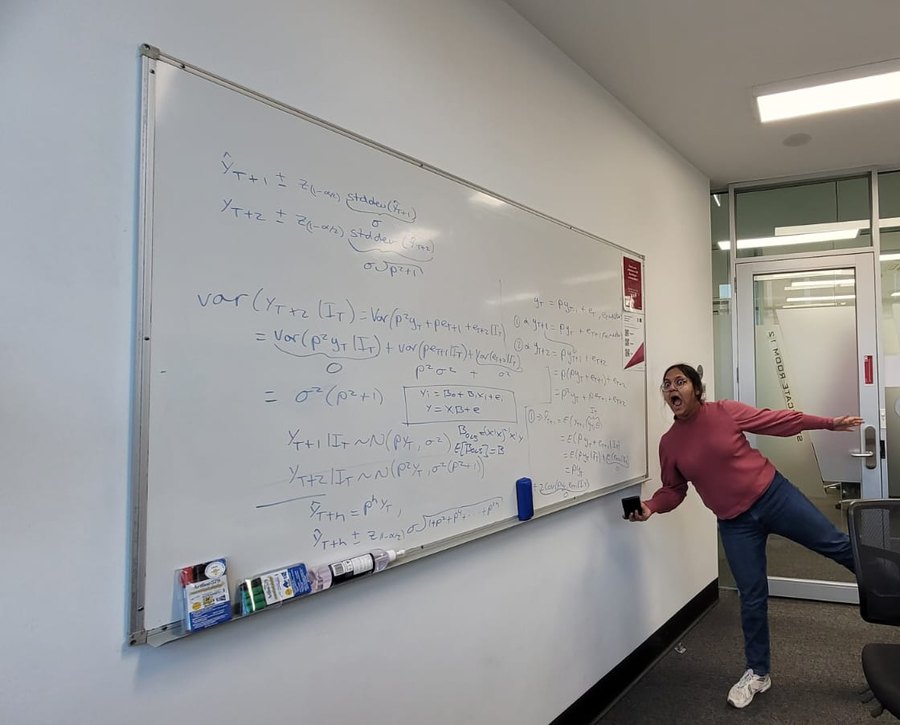
Shambhavi Gupta celebrating in front of a whiteboard covered in predictive analytics derivations
aah! finally dissected the first predictive analytics lecture

2024

AGL Energy Commercial Analyst, Credit and Affordability

2023

Stanford University Summer Graduate Session, Sustainability Design Thinking and Technology Entrepreneurship
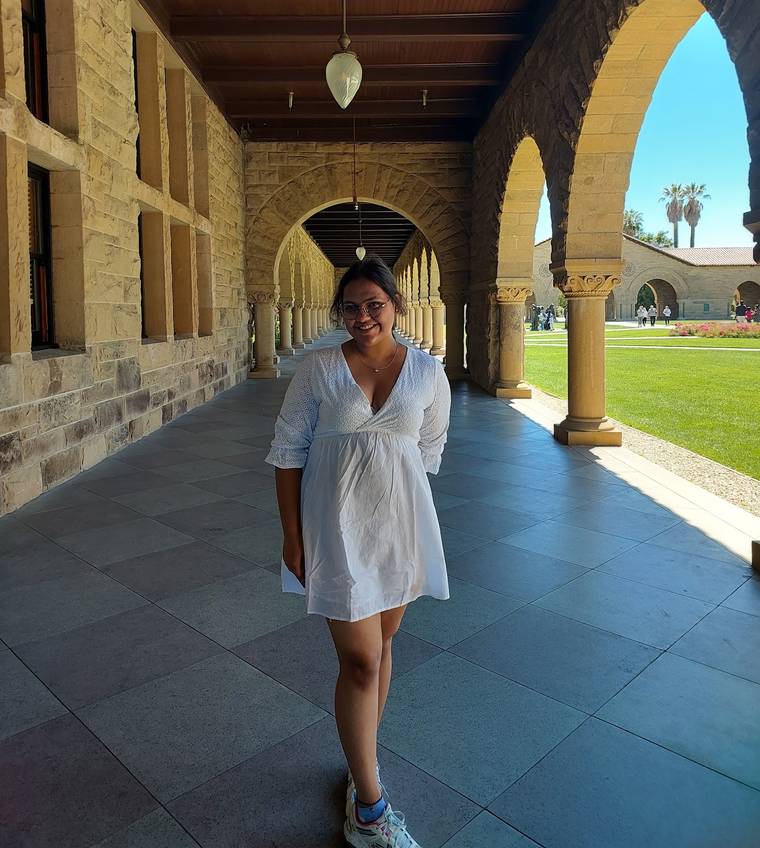
Shambhavi Gupta in the Main Quad arcade at Stanford University
my first summer at stanford

2019 – 2023

NMIMS University, Mumbai B.Tech, Computer Engineering
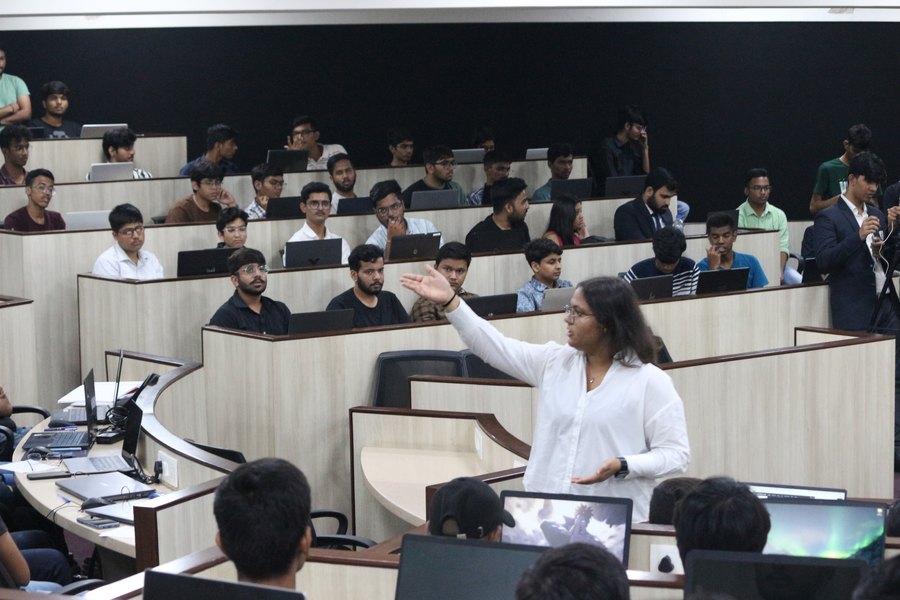
Shambhavi Gupta speaking to a full lecture theatre of students at NMIMS
returning to my undergrad alma mater to talk to students and share my experiences

04 – Lately

Recent activity

What I have been thinking about lately, straight from the source. All of it on LinkedIn.

Scroll sideways for more